Low-Maintenance Living in Germantown: The Townhome and Condo Option
Kelly Day September 24, 2026
Kelly Day September 24, 2026
Not everyone who wants to live in Germantown wants to take care of half an acre.
I have this conversation regularly, and it usually starts the same way. Someone loves this town - the schools their children went through, the parks, GPAC, the neighbors they have known for twenty years - and has simply reached a point where the house and the yard have become more than they want to manage.
The good news is that leaving the house does not have to mean leaving Germantown. There is a well-established townhome and condominium market here, and it is worth understanding properly.
What Germantown Offers
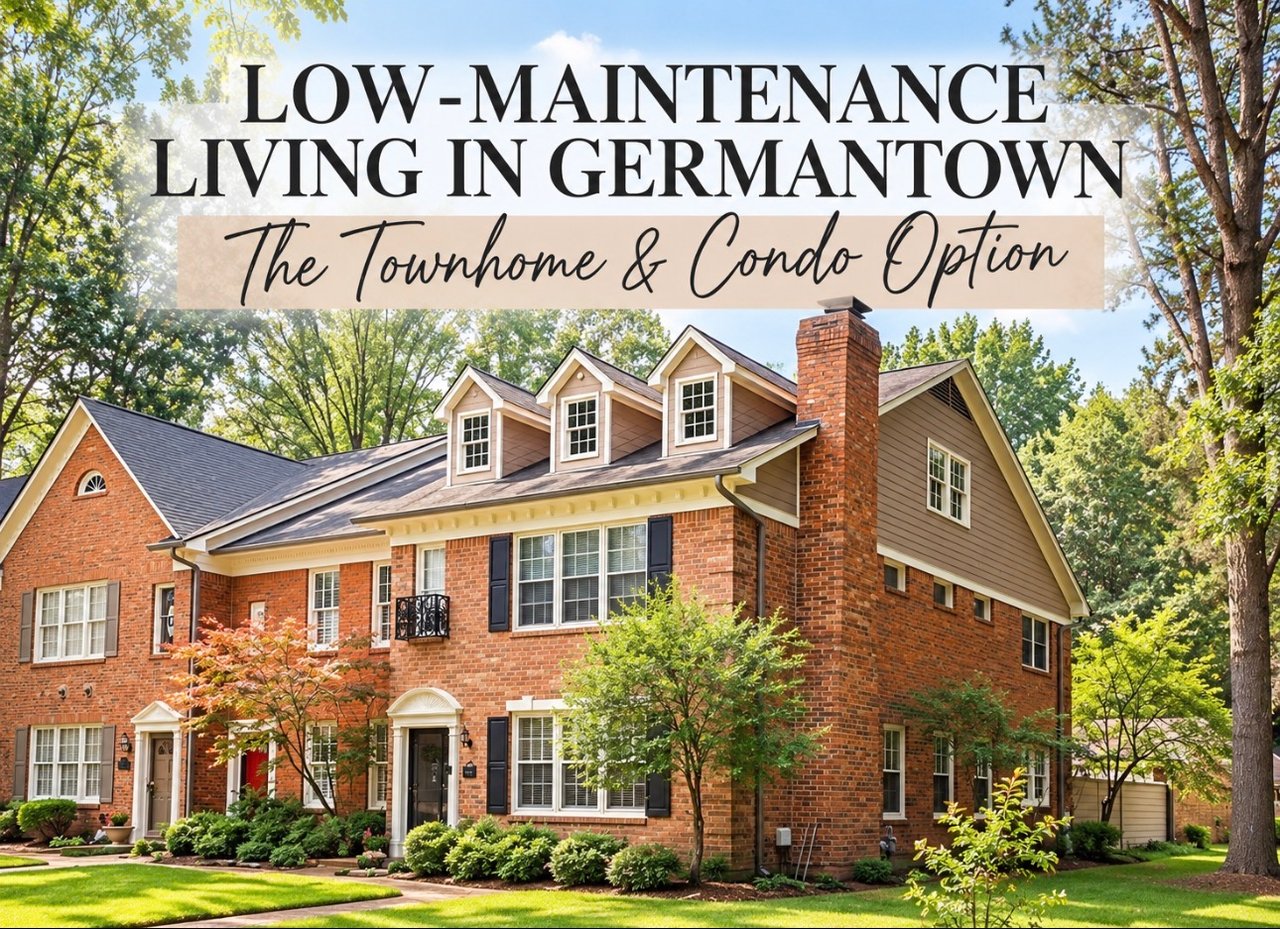
The town's attached-home communities include Kimbrough Park Townhomes, near the recognizable Kimbrough cluster; Woodshire Townhouses; Hobbits Glen Condominiums; and Vinings at Germantown.
These communities differ from one another in age, layout, and character, so it is worth touring more than one before you decide what you think of the category as a whole. A townhome with a private entry and an attached garage lives very differently from a condominium with shared corridors, even though both are described the same way in casual conversation.
What they share is the essential trade: less exterior responsibility in exchange for an association fee and a smaller footprint. For the right buyer, that is not a compromise. It is an upgrade.
Who This Genuinely Suits
In my experience, four kinds of buyers do especially well here.
Homeowners rightsizing after the children have gone. This is the largest group, and I hold my Seniors Real Estate Specialist designation in large part because these transitions deserve care. Moving out of a family home is not simply a property decision - it is a chapter. The people who navigate it best are the ones who plan it early rather than being forced into it.
Buyers who travel. If you are away for weeks at a time, a lock-and-leave home is worth a great deal. You are not arranging lawn service or worrying about what the yard looks like while you are gone.
Professionals and couples who want the Germantown address without the Germantown Saturday. Younger buyers moving into town for work often find a townhome is how they get here at a price that works, with a lifestyle that fits how they actually spend their time.
And families in transition. Between selling one home and building another, or newly relocated and not yet sure which neighborhood is right, an attached home offers a comfortable place to stand while the next decision comes into focus.
What to Look at Carefully
Attached-home ownership has its own due diligence, and it is different from buying a single-family house. A few things I always want my clients to understand before they commit.
Read the association documents. All of them. The rules, the budget, the meeting minutes, and any reserve study. The minutes in particular will tell you what the community actually worries about - deferred repairs, disputes, and pending projects that a listing will not mention.
Understand the reserves. A healthy association sets money aside for the roofs, the paving, and the exterior work that will eventually come due. An association with thin reserves may be running a low monthly fee today and heading toward a special assessment tomorrow. The low fee is not a bargain if it is borrowed from the future.
Know exactly what the fee covers. Exterior maintenance, roofs, landscaping, insurance, water, trash - these vary widely between communities. Two similar-sounding fees can mean very different things.
Ask about the ownership mix. A community with a high proportion of owner-occupants tends to be better maintained and easier to finance. Some lenders limit lending in communities with heavy rental concentration, which can affect both your purchase and your eventual resale.
And be clear about what is yours to maintain versus the association's. That boundary is not always where people assume, and it is much easier to establish before closing than during a repair.
Value and Resale
Attached homes in Germantown tend to appeal to a somewhat narrower buyer pool than single-family houses, which is worth knowing going in. In exchange, they generally sell at a more accessible price point and carry much less exterior upkeep.
Well-run communities in good locations hold up well over time. The variable that matters most is management - a community with sound finances, sensible rules, and a maintained appearance will always find its buyer. One with deferred projects and an underfunded reserve is a harder sell, sometimes considerably.
This is one area where I would strongly encourage you not to shop alone from listing photos. The differences between these communities are largely invisible from the outside, and they live inside the documents.
Financing an Attached Home
Financing a townhome or condominium works a little differently than financing a single-family house, and it is worth knowing before you fall in love with a unit.
Lenders evaluate the community as well as the buyer. They look at the association's financial health, the percentage of units that are owner-occupied, whether any litigation is pending, and how much of the property a single owner controls. A community that falls outside those guidelines can be harder to finance, which affects both your purchase and your eventual resale.
The practical step is simple: talk to a lender who has done these loans locally before you start touring. If a particular community presents a financing challenge, you want to learn that in week one rather than two weeks before closing.
Insurance also works differently. The association typically carries a master policy on the structure, and you carry a separate policy for your interior and belongings. Ask what the master policy actually covers so your own coverage lines up with it rather than duplicating or leaving a gap.
Space, Storage, and Being Realistic
The honest challenge in rightsizing is not square footage. It is storage.
Most family homes in Germantown have decades of accumulation - attics, garages, closets, a workshop, the room that quietly became a storage room. Attached homes are efficient by design, and they rarely have that surplus.
So the move works best when the sorting starts early. Give yourself months rather than weeks. Decide what genuinely comes with you, what goes to family, and what does not need to make the trip. People who begin that process well in advance find the move manageable. People who begin it two weeks out find it overwhelming, and often make expensive decisions under pressure.
One more practical note: measure. Bring the dimensions of the pieces you cannot part with and check them against the rooms before you commit. It is a small step that prevents a very common disappointment.
The Emotional Part
I want to say something that goes beyond square footage.
If you are considering leaving a home where you raised your family, that is not a small thing and it should not be rushed. There is grief mixed in with the relief, and both are appropriate.
What I have seen, though, is that the people who make this move on their own terms - while they still have energy, choice, and time - are almost always glad they did. They spend their weekends differently. They travel more easily. They stop bracing for the next thing to break.
The ones who wait until circumstances force the decision have a much harder time of it. If this is on your horizon at all, I would rather you think about it early, with no pressure and no timeline, than have it decided for you.
Staying in the Town You Love
The heart of this post is simple. You do not have to leave Germantown to leave the upkeep behind. The parks are still here. The market on Saturday morning is still here. GPAC is still ten minutes away. Your friends are still down the road.
If you are thinking about rightsizing - this year, or three years from now - I am always glad to talk it through. What your current home would bring, what these communities actually cost and require, and what the transition would realistically look like.
No pressure. No obligation. Just honest guidance from someone who understands what this kind of move really involves.
Kelly Day, SRES, SRS, AHWD, PSA, RENE
Multi Million Dollar Club
Broker Lic # 365811
simpliHOM
901-289-9227
855-856-9466



Design & Trends

Local Memphis

Buying

Buying
We'd love to hear from you! Whether you're buying, selling, or just exploring your options, we're here to provide answers, insights, and the support you need. Contact us and start planning your next move.