Should You Put More Money Down or Keep Cash in the Bank?
Should You Put More Money Down or Keep Cash in the Bank?
You’ve been saving for a house. Maybe for years.
You’ve watched the balance in your savings account grow, skipped a few things you wanted, and told yourself,“One day, this is going to be my down payment.”
And then you finally find the house.
Now you’re sitting across from your lender talking numbers, and someone asks:
“How much do you want to put down?”
That’s when things can get a little more complicated.
Maybe you have enough saved to put 20% down. Maybe you could even put more down. And naturally, you start thinking,“Wouldn't it be better to put as much as possible into the house?”
Not necessarily.
The truth is,there’s a difference between being able to put more money down and it actually being the best financial decision for you.
And this is one of those decisions where I think it’s worth slowing down and looking at the whole picture.
First, why would you want to put more money down?
There are some very good reasons.
A larger down payment generally means you’re borrowing less money. Borrowing less can mean a lower monthly mortgage payment and less interest paid over the life of the loan.
Depending on your loan type and circumstances, putting 20% down may also allow you to avoid private mortgage insurance, commonly called PMI.
And there’s something to be said for starting homeownership with more equity in your home.
For example, if you’re buying a $400,000 house and put 20% down, you’re borrowing $320,000 instead of $360,000 if you put 10% down.
That’s a meaningful difference.
But here’s where I want buyers to pause:
Just because you have the money doesn't mean you have to put all of it into the house.
Your house isn't the only thing that needs your money.
This is probably one of the biggest things I want buyers to think about.
When you’re buying a house, it’s easy to focus on the down payment because it feels likethebig number.
But the down payment is only part of the financial picture.
You’ll also have closing costs, moving expenses, insurance, taxes, furnishings, and all those little things that somehow add up very quickly.
And then there’s the house itself.
Houses are wonderful.
They are also incredibly good at finding ways to spend your money.
The water heater doesn't care that you just closed.
The HVAC doesn't care that you have a moving truck sitting in the driveway.
And the roof certainly doesn't care that you were trying to stick to a budget.
Sometimes the “surprise” expense isn't even something major. Maybe you realize the refrigerator needs to be replaced. Maybe the fence needs work. Maybe you need to replace a few light fixtures, paint a couple of rooms, or buy blinds for 17 windows because apparently windows multiply when you're not looking.
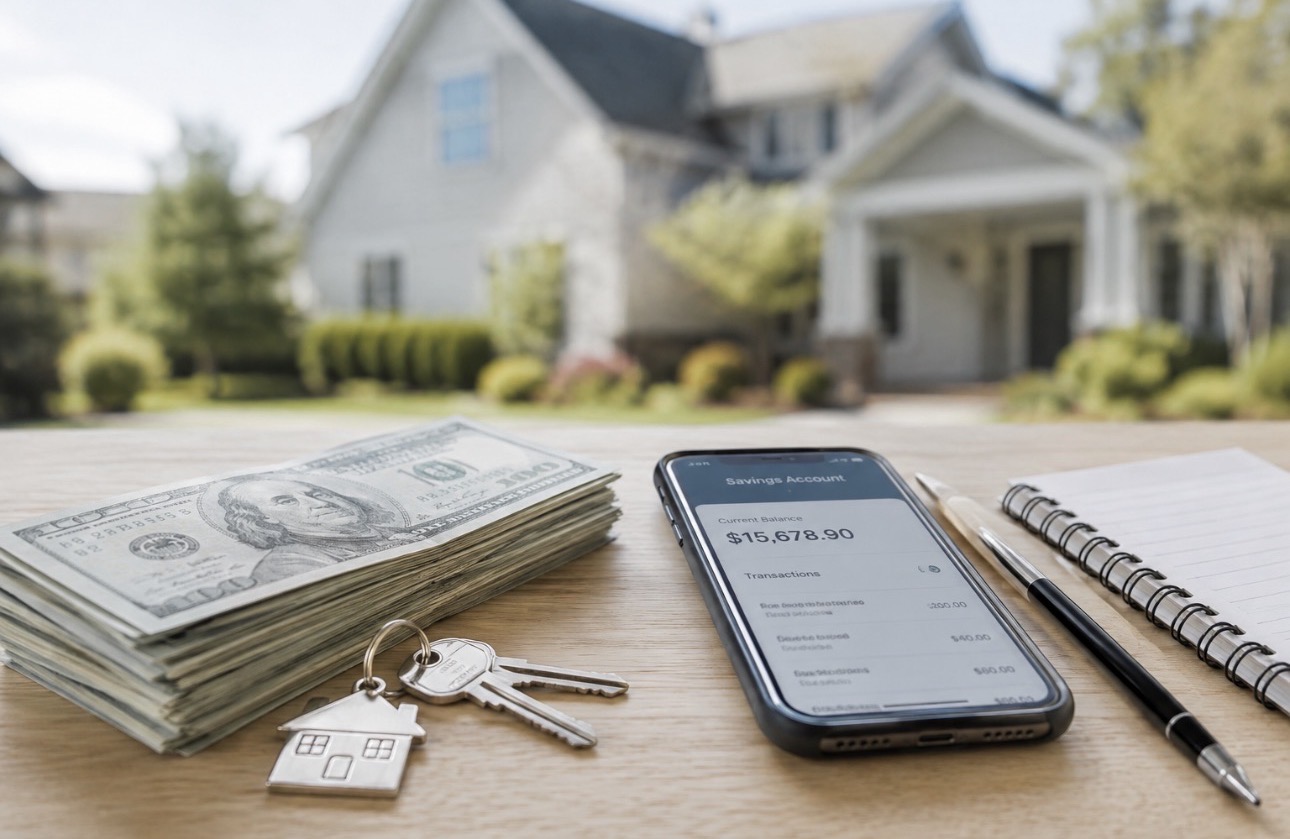
Suddenly, that extra $20,000 you put toward the down payment sounds pretty useful sitting in your savings account.
So, should you keep cash in the bank?
Maybe.
Having cash available after you buy a home can give you something incredibly valuable:
Options.
You have money available if something unexpected happens.
You have money available if you decide to make an improvement.
You have money available if life throws you a curveball.
And perhaps most importantly, you have a little breathing room.
I don't want my clients to move into their beautiful new home and then spend the next six months worrying about every unexpected expense because they emptied their savings account to get the mortgage balance a little lower.
Homeownership should feel exciting.
It shouldn't feel like you're constantly one broken appliance away from a financial crisis.
But what about PMI?
This is where the conversation gets a little more specific.
Many buyers hear,“Put 20% down so you don't have PMI,”and assume that's automatically the best answer.
But PMI isn't necessarily something you should fear at all costs.
Depending on the loan and your financial situation, paying PMI for a period of time could potentially make more sense than putting a large amount of cash into the house and leaving yourself with very little savings.
That's a conversation you should have with your lender because the numbers can vary significantly from one buyer to another.
Ask them to show you the difference.
What would your monthly payment be with 10% down? 15%? 20%?
How much would PMI cost?
How much cash would you have left after closing?
How long would it take for the additional down payment to make a meaningful difference?
Once you see the numbers side by side, the decision often becomes much clearer.
There's no magic number that works for everyone.
This is where I think home buying advice can sometimes become too generic.
You'll hear things like:
“Always put 20% down.”
Or:
“Never put more than 5% down.”
Or:
“Put as little down as possible and keep your cash.”
But real life doesn't work that neatly.
A first-time buyer with a stable job, substantial savings, and no debt may have a very different answer than a buyer who is self-employed, has kids, has an upcoming major expense, or is using nearly all of their savings to purchase the home.
Your down payment should fityour life, not somebody else's rule.
Here's the question I would rather you ask.
Instead of asking:
“What's the biggest down payment I can afford?”
Ask:
“How much can I comfortably put down while still having enough money left over to feel secure?”
That's a much better question.
Because buying a home isn't just about getting approved for a mortgage.
It's about what happensafteryou get the keys.
Can you make the payment comfortably?
Can you handle an unexpected repair?
Can you still save money?
Can you enjoy your new home without feeling like every dollar is already spoken for?
Those things matter.
And this is where your Realtor and lender play different roles.
Your lender can help you understand the financial and loan side of the decision. They can run the numbers, explain different loan options, and show you how your down payment affects your monthly payment and other costs.
As your Realtor, I'm looking at the bigger picture of the home purchase with you.
I'm thinking about the house you're buying, the neighborhood, the condition of the property, what you may need to spend after closing, and whether this purchase makes sense for what you're trying to accomplish.
And sometimes that means telling a client something they may not want to hear.
“I don't think you should spend every dollar you have on this house.”
Or:
“Let's slow down and look at these numbers again.”
Or even:
“I think you're better off waiting.”
That's not me trying to talk you out of buying a home.
It's me trying to make sure that when you do buy, you're making a decision you feel good about six months—or six years—from now.
So, what's the right answer?
The answer may be 20% down.
It may be 10%.
It may be more.
It may be less.
And for some buyers, the right answer may be waiting until they have a little more saved.
There is no prize for having the biggest down payment.
The goal isn't simply to get the mortgage balance as low as possible.
The goal is to buy a home that fits your lifeandyour finances.
So before you move every dollar from your savings account into your down payment, take a breath.
Talk to your lender.
Look at the numbers.
Think about what you want your financial life to look likeafterclosing—not just on closing day.
And remember:you don't have to rush this decision just because you're buying a house.
That's something I tell my clients all the time.
The right move isn't always the biggest move.
Sometimes, it's simply the smartest one.
Kelly Day, SRES, SRS, AHWD, PSA, RENE
Multi Million Dollar Club
Broker Lic # 365811
simpliHŌM
901-289-9227
855-856-9466
[email protected]
https://memphishouselistings.com