
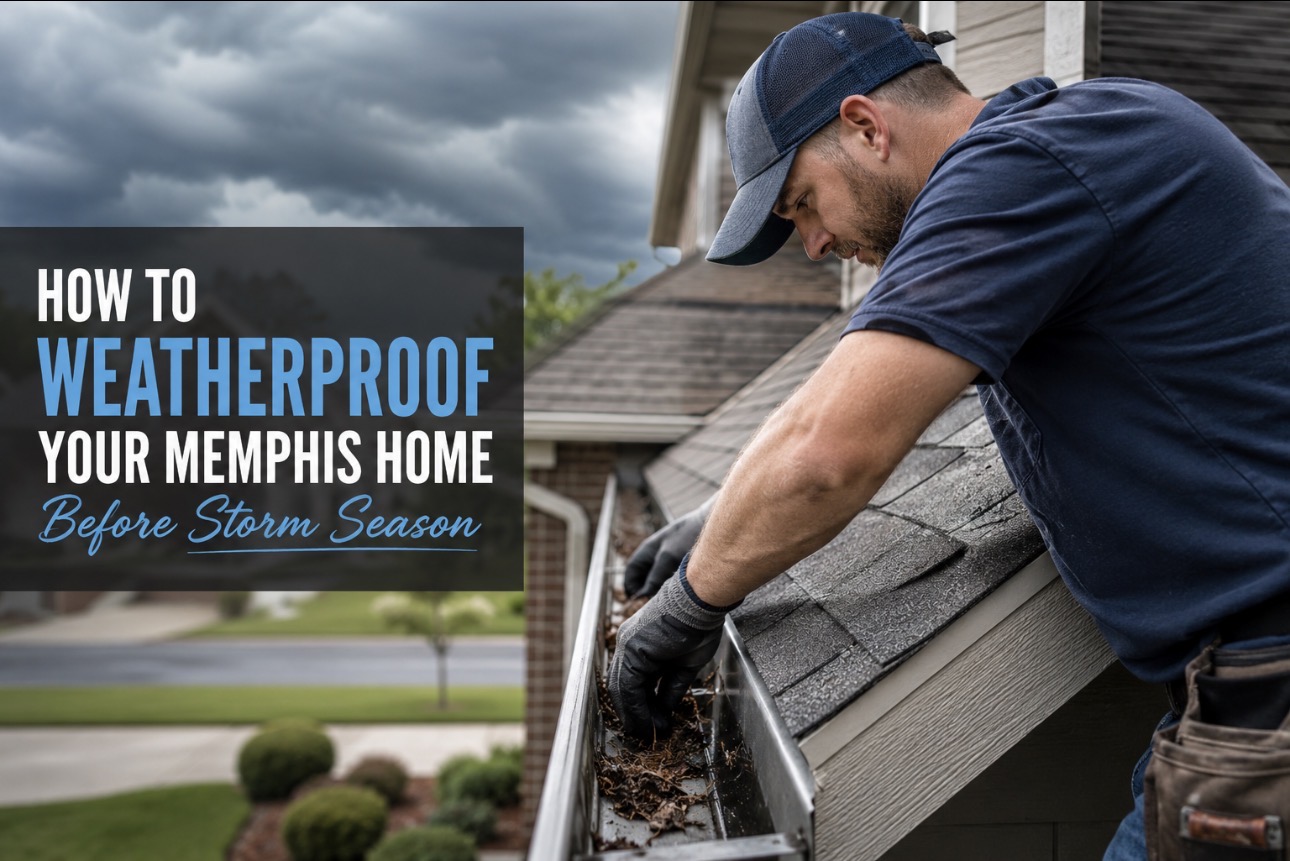
How to Weatherproof Your Memphis Home During Storm Season
How to Weatherproof Your Memphis Home Before Storm Season
Storm season in Memphis, Tennessee, can bring heavy rain, strong straight-line winds, hail, lightning, and, at times, tornadoes. Recent storms across the Memphis area have produced wind gusts of 60–70 mph, with the National Weather Service warning of potential damage to roofs, siding, trees, and outbuildings.
While you can't control the weather, you can take steps now to protect your home from many of the problems severe storms can cause.
Here are some of the most important ways Memphis homeowners can prepare their homes for storm season.
1. Inspect Your Roof Before the Next Big Storm
Your roof is your home's first line of defense against wind and rain. Even a small problem—such as a loose shingle, damaged flashing, or deteriorated seal—can become a major leak during a severe storm.
Before storm season gets into full swing, look for:
Missing, cracked, curled, or damaged shingles
Loose or damaged flashing around chimneys and vents
Damaged pipe boots and roof penetrations
Signs of water damage in the attic or ceilings
Sagging areas of the roof
Excessive granules in gutters or downspouts
If you aren't comfortable inspecting your roof yourself, consider having a professional perform a roof inspection. Catching a problem before a storm is usually much easier—and less expensive—than dealing with emergency water damage afterward.
2. Clean and Check Your Gutters
Memphis can experience intense rainfall during thunderstorms, and clogged gutters can prevent water from moving away from your home efficiently. The result can be overflowing gutters, water intrusion, foundation problems, and erosion around your property.
Clean out leaves, sticks, and other debris from your gutters and make sure downspouts are securely attached.
It's also important to check where your downspouts discharge water. Ideally, water should be directed away from your home's foundation rather than collecting next to the house.
The National Weather Service has recently issued flood advisories for Shelby County involving heavy rainfall and flooding in low-lying and poorly drained areas, making proper drainage an important part of storm preparation in the Memphis area.
3. Trim Trees and Remove Dangerous Branches
Trees can provide beautiful shade around a Memphis home, but large or weakened branches can become dangerous projectiles during high winds.
Inspect the trees around your property and look for:
Dead branches
Hanging or broken limbs
Branches touching the roof
Trees leaning toward your home
Large limbs hanging over driveways, vehicles, or power lines
The National Weather Service recommends keeping trees and branches trimmed near your home as part of severe-weather preparation.
If a tree appears unstable or is located near power lines, hire a qualified professional rather than attempting to remove it yourself.
4. Secure Outdoor Items
Before a storm arrives, walk around your property and secure anything that could become airborne.
This includes:
Patio furniture
Grills
Trash cans
Planters
Umbrellas
Children's outdoor toys
Lawn decorations
Tools and equipment
Strong winds can turn unsecured objects into flying debris capable of damaging windows, siding, vehicles, and roofs.
The National Weather Service specifically recommends securing loose outdoor objects before severe thunderstorms.
5. Check Windows and Doors
Windows and exterior doors are another potential entry point for wind and rain.
Check the condition of weatherstripping around exterior doors and inspect caulking around windows for cracks or deterioration. Replace damaged weatherstripping and recaulk areas where necessary.
If your home has older windows, consider whether storm-resistant upgrades could provide additional protection.
Don't forget your garage door. Because of its large surface area, a garage door can be particularly vulnerable to strong winds. Make sure it operates properly and that its hardware is in good condition.
6. Protect Your Attic and Ventilation System
A properly maintained attic can help prevent moisture problems during severe weather.
Look for signs of:
Roof leaks
Water stains
Damp insulation
Mold or mildew
Damaged ventilation components
Daylight coming through the roof
Proper attic ventilation is also important for managing heat and moisture throughout the year.
If you discover water damage or an active leak, have it evaluated promptly. A small leak can become a much larger interior repair after repeated storms.
7. Make Sure Your Home Has a Safe Place During Severe Weather
Weatherproofing isn't only about protecting your property. It's also about protecting the people inside it.
Identify a safe location in your home before severe weather arrives. The National Weather Service recommends a basement, storm cellar, or an interior room on the lowest floor away from windows when severe weather threatens.
Make sure everyone in your household knows where to go and what to do when a warning is issued.
Keep emergency supplies nearby, including flashlights, batteries, chargers, water, basic first-aid supplies, and important medications.
8. Keep Up With Memphis Weather Alerts
Don't wait until you hear thunder to start paying attention to the forecast.
Monitor the National Weather Service and local emergency alerts when severe weather is expected. Memphis can experience rapidly developing thunderstorms, and recent local warnings have included damaging winds, hail, and flash-flooding threats.
It's especially important to understand the difference between awatchand awarning:
Watch:Conditions are favorable for severe weather. Stay alert and be prepared to act.
Warning:Severe weather is occurring or has been detected nearby. Take shelter immediately.
Having a plan before a warning is issued gives you more time to protect your family and property.
9. Check Your Homeowners Insurance
Storm preparation is also a good opportunity to review your homeowners insurance policy.
Make sure you understand what your policy covers in the event of wind, hail, falling trees, water intrusion, and other storm-related damage. Keep copies of important documents in a secure location, and consider taking photos of your home and major belongings before storm season.
If your home is damaged during a storm, take photographs and document the damage as soon as it is safe to do so. Avoid making major repairs yourself unless necessary to prevent additional damage, and contact your insurance company and a qualified professional for guidance.
10. Don't Wait Until After the Storm
One of the biggest mistakes homeowners can make is waiting until severe weather is in the forecast to discover that their roof, gutters, trees, or windows need attention.
A few hours of preparation can potentially prevent thousands of dollars in damage.
Consider making storm preparation part of your regular home maintenance routine. Inspect your roof, clean your gutters, trim trees, secure outdoor belongings, check your windows and doors, and make sure your family knows where to take shelter.
Final Thoughts
Storm season is a fact of life for Memphis homeowners, but being prepared can make a major difference.
With recent Mid-South storms producing damaging winds and significant tree and property damage, now is a good time to take a closer look at your home's exterior.
Don't wait for the next storm to find out whether your home is ready.A professional inspection and a little preventative maintenance today can help protect your home, your belongings, and your family when severe weather arrives.
Kelly Day, SRES, SRS, AHWD, PSA, RENE
Multi Million Dollar Club
Broker Lic # 365811
simpliHŌM
901-289-9227
855-856-9466
[email protected]