
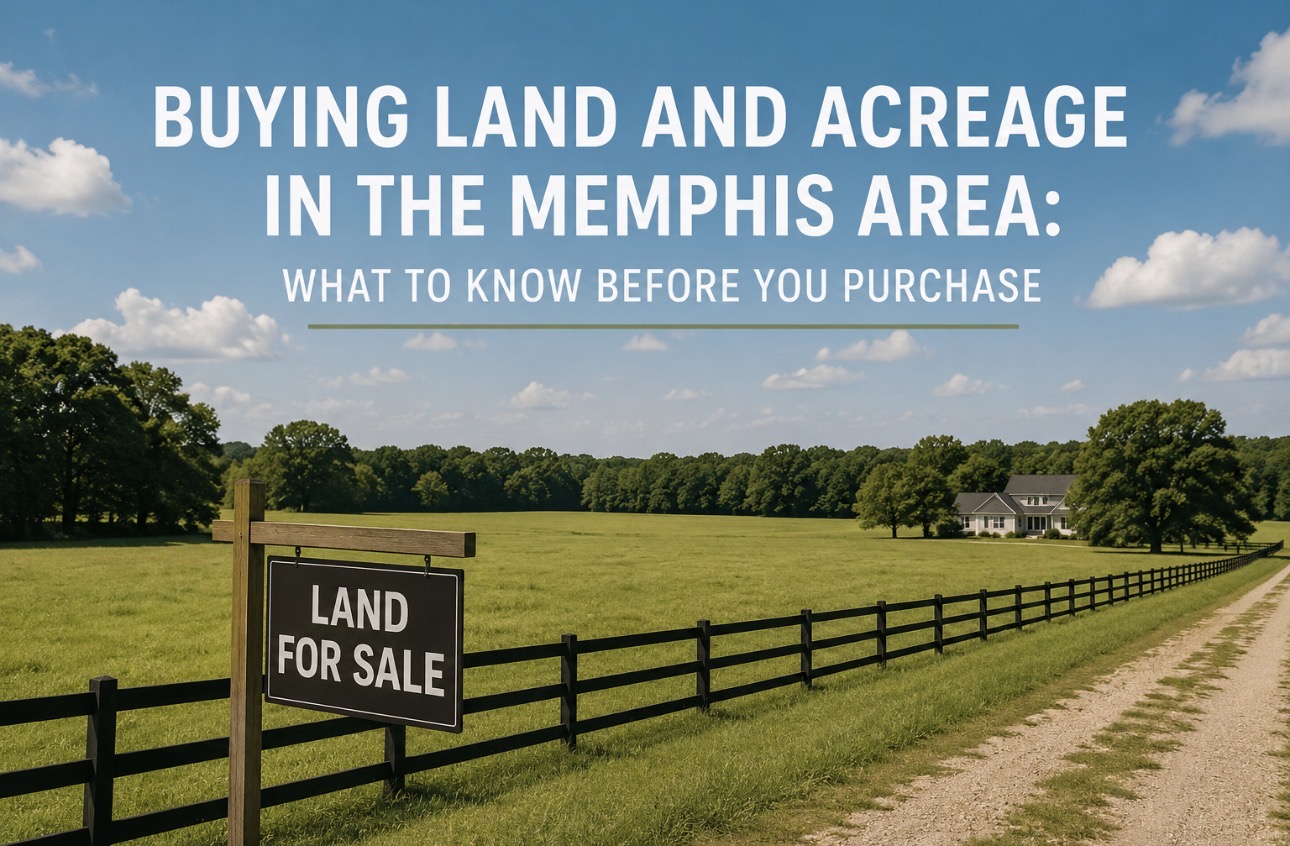
Buying Land and Acreage in the Memphis Area: What to Know Before You Purchase
Why More Memphis-Area Buyers Are Looking at Land
Space, privacy, and room to grow are drawing more buyers past the city limits and into the countryside surrounding Memphis. Towns like Rossville, Oakland, Piperton, Munford, and Atoka offer sizable parcels within an easy drive of Germantown and Collierville, making them appealing for families who want a garden, a workshop, horses, or simply distance from the nearest neighbor. Land can also be a long-term investment as the metro keeps expanding eastward. Before you fall for a pretty pasture, though, it helps to understand what makes buying land different from buying a house.
Know the Difference: Raw Land, Improved Lots, and Acreage
Not all land is created equal. Raw land has no utilities, road access, or improvements, which usually means the lowest price but the most work to make it buildable. An improved lot may already have water, power, or a septic system in place and sits ready for construction. Acreage falls somewhere in between and can range from a few wooded acres to a working farm. Knowing which category you are considering shapes everything that follows, from what you will pay to how you will finance it and how quickly you can break ground.
Zoning and Land Use in Fayette and Tipton Counties
Zoning determines what you can actually do with a piece of ground, and it varies widely across the Memphis suburbs. A parcel zoned agricultural may limit how many homes you can build or whether you can run a business, while some rural tracts carry minimum acreage requirements per dwelling. Fayette and Tipton counties each have their own planning offices and land-use rules, and municipalities like Piperton and Atoka may layer on additional requirements. Always confirm zoning and any deed restrictions with the county before you buy, so your plans for the property are actually allowed.
Water, Septic, and Utilities: The Rural Essentials
City buyers often take water, sewer, and utilities for granted, but rural land rarely comes hooked up. You may need to drill a well and install a septic system, and not every site passes the percolation test required for septic approval. Electricity, natural gas, and high-speed internet can also be limited or costly to extend to a remote parcel. Before you commit, find out what is already in place and get estimates for anything missing. These costs can add tens of thousands of dollars and should factor into your offer from the start.
Financing Land Is Different From a Mortgage
Buying land usually does not work like buying a house. Traditional mortgages are for homes, so vacant land is often financed through a land loan, which typically requires a larger down payment, carries a higher interest rate, and comes with a shorter term. If you plan to build, a construction loan or a combined construction-to-permanent loan may be a better fit. Local banks and credit unions that understand West Tennessee and North Mississippi land are often more flexible than national lenders. Talking to a lender early helps you understand your budget before you start touring parcels.
Access, Easements, and Boundary Lines
With rural property, how you get to the land matters as much as the land itself. Some parcels are landlocked and rely on an easement across a neighbor's property, which should be documented in writing and recorded. Shared driveways, utility easements, and old rights-of-way can all affect how you use your ground. It is also wise to order a survey so you know exactly where your boundaries lie rather than trusting a fence line that may have shifted over the years. Clarifying access and lines up front prevents expensive disputes later.
Building Your Home vs. Holding the Land
Some buyers purchase acreage to build a dream home right away, while others buy and hold, letting the land appreciate as growth pushes east. Both are valid strategies, but they call for different planning. If you are building soon, you will want a site that perc tests well, has reasonable utility access, and sits in a location that fits your commute and school preferences. If you are holding for the future, property taxes, maintenance like bush-hogging, and how the area is likely to develop all deserve a look. Be honest about your timeline before you buy.
Working With an Agent Who Knows Rural Ground
Buying land rewards local knowledge. An agent familiar with the rural Memphis suburbs can point you toward reputable well drillers, septic installers, surveyors, and land-savvy lenders, and can spot red flags a city-focused agent might miss. They will also help you read the fine print on zoning, easements, and flood-prone bottomland. Whether you are eyeing a few acres near Rossville or a larger tract in Tipton County, having someone who understands both the paperwork and the terrain makes the whole process far less daunting and helps you buy with confidence.
Thinking about your next move in the Memphis area? Whether you're buying, selling, or just exploring your options, I'd love to help you navigate it with confidence. Reach out any time — I'm always happy to talk through what makes sense for your situation.
Kelly Day, SRES, SRS, AHWD, PSA, RENE
Multi Million Dollar Club | Broker Lic # 365811
simpliHOM | 901-289-9227 | 855-856-9466
[email protected] | https://memphishouselistings.com